


The Hard Road to Dasa: Palisades’ Largest Uranium Position Secures US$414M Loan from U.S. Government
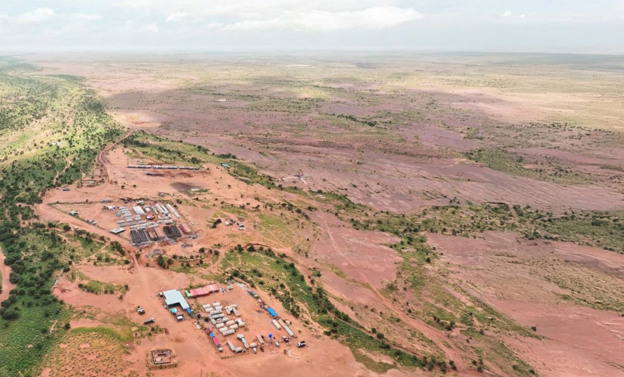
On Wednesday, September 16, Global Atomic Corporation (TSX: GLO) was halted mid-afternoon pending material news. When it resumed just over an hour later, the market learned that the Board of the U.S. International Development Finance Corporation (DFC) had approved a debt facility of up to US$414.2 million for the company’s Dasa Project in Niger.
Shares jumped immediately on the news, closing the day up 45% before easing back to a 27% gain by the end of the week. Within a month, the stock had fallen to its lowest level in over five years.
To understand why a financing approval moved a stock that hard, and why it has since pulled back, you have to understand what the last three years have looked like for anyone holding a mining permit in Niger — and what it took for Global Atomic to still be standing.
Why Niger in the First Place?
Stephen Roman, CEO of Global Atomic, was born into uranium. His father built Denison Mines into one of Canada’s largest uranium producers, and Roman spent 25 years there before striking out on his own.
When he founded Global Atomic in 2005, he made a contrarian call that looks prescient now and looked merely stubborn for most of two decades.
He believed that Canadian permitting timelines of 20 to 30 years made domestic uranium development commercially impractical, and that Niger — then opening to foreign investment, with a uranium industry dating to 1971 — was where a deposit could actually become a mine inside an investable horizon.
That judgment brought Global Atomic to the Tim Mersoï Basin, and eventually to Dasa.
It also meant that when Niger’s politics ruptured, Roman had spent nearly twenty years building relationships in a country most of his competitors had arrived in far more recently.
In our most recent episode on Palisades Gold Radio, Roman tells the full story himself. Watch the interview here.
The Nigerien Coup d’État
On the morning of July 26, 2023, the presidential guard detained President Mohamed Bazoum, and by evening Niger had a new military government under General Abdourahmane Tiani.
Within months, French troops were expelled. In May 2024, Russian military personnel arrived, and by summer, American forces had been ordered out of the country entirely, ending a decade of U.S. counterterrorism presence.
For the uranium industry, this was not an abstract geopolitical realignment.
Niger had supplied roughly 5% of the world’s uranium and more than a quarter of the European Union’s — France, which draws two-thirds of its electricity from nuclear, sourced about 15% of its uranium there.
The junta moved decisively against that arrangement.
In June 2024, Niger revoked majority French-owned Orano’s operating permit for Imouraren, one of the largest undeveloped uranium deposits on earth.
Weeks later, in July, it stripped Canada’s GoviEx of its Madaouela permit — a project with a completed feasibility study, 650,000 meters of drilling behind it, and a US$343 million development plan ready to execute.
Then, in June 2025, the military state nationalized SOMAÏR outright, the Arlit mine Orano had operated since 1971. Both disputes went to international arbitration, where they largely remain.
By 2024, Niger’s share of global uranium production had collapsed to 1.6%.
Global Atomic kept its permits. It is the only Western-listed uranium developer in Niger that did.
The Tightrope
Keeping its permits came at a price.
Conventional project finance follows a sequence: secure the debt, then break ground. Roman had to invert it.
With a government actively repossessing assets it deemed idle, stopping work to wait for a signed debt facility would have invited that exact outcome.
So, despite the debt package remaining unsigned, which forced the balance sheet to carry the weight, Global Atomic kept building — sinking the decline, developing underground, reaching the ore zone.
That is not a decision a first-time CEO makes, and it is not one a board approves without conviction in the person proposing it. It is also the decision on which everything else in this letter rests.
The debt package had its own difficulties.
The DFC’s original contemplated facility was roughly US$295 million, covering about 60% of project costs.
It stalled almost immediately when Washington formally designated the 2023 takeover a coup, restricting the development bank’s ability to participate at all.
Further delays followed as the file moved through extended credit, investment, and board-level review, with Niger’s political risk profile the central question at every stage.
Through all of it, Roman kept the company financed from equity markets and the balance sheet, under exactly the kind of pressure that forces bad decisions on lesser management teams.
Funding that construction took a series of equity financings from 2023 onward.
Each asked investors to put risk capital behind a mine in a country where two peers had just been expropriated with no debt facility signed and no certainty there would ever be one — capital that simply would not have come back had the project financing failed to close.
Those financings are where Palisades built its position.
We participated in the units on offer, which is why we hold such a significant warrant position.
Our model is well suited to supply capital at the point of maximum uncertainty and take our return in optionality, rather than immediate ownership. It is deliberately the least comfortable moment to write a check. It is also the moment at which terms like these are available.
Roman also did something harder to quantify but arguably more important: he stayed on the right side of the government.
In August 2024 — the same summer the junta was revoking everyone else’s licenses — the Tiani administration designated Dasa a cornerstone for the country’s socio-economic development, a position it has publicly reaffirmed in 2025 and 2026, including a ministerial site visit.
Orano and GoviEx were both engaging the same government at the same time. Only one company came through with its permits intact.
Why Washington Came Back
The DFC describes itself as the international investment arm of the U.S. government and central to American economic statecraft.
That framing matters here.
This is the largest U.S. development finance commitment ever directed at an African critical minerals project, and it lands in a country that expelled American troops two years ago and now relies on Russian security partners.
The logic behind the DFC’s commitment is supply.
The United States runs a structural uranium deficit of roughly 45 million pounds per year, and its enrichment supply chain has historically routed through Russia.
Dasa, at full production, would produce volumes comparable to all current U.S. uranium mine output combined.
Niger’s break with Orano opened a window. Rather than falling into a competing sphere of influence, the resource became available to a Western developer that already held a permit and had a working relationship with the government.
Recent developments suggest the environment is stabilizing.
In August, Australia’s Atomic Eagle (merged with GoviEx) negotiated its way back into Madaouela. Last month, the company formally executed a new mining convention with a 60/40 split in Atomic Eagle’s favor — the first successful resolution of a revoked-permit dispute, and precisely the kind of precedent that helps lenders underwrite country risk.
What Still Needs to Happen
We want to be clear-eyed: board approval authorizes a facility; it does not release money.
Five material conditions stand between here and first disbursement, and they are linked dependencies rather than a checklist:
- Identifying a viable, secure route to export yellowcake from a landlocked country whose traditional corridor through Benin has been disrupted since the coup
- Extending the Mining Convention and Mining Permit on terms that harmonize with the tenor of the facility
- Securing government assurances on approvals for loan repayments out of Niger
- Negotiating a direct agreement with the government
- Completing definitive loan documentation and satisfying conditions precedent
Most commentary has fixed on the first as the hardest. We would direct your attention to the second.
Harmonizing the mining permit with the loan’s tenor means extending the permit to match a facility that will outlast the current political arrangement in Niamey.
Essentially, the DFC is asking a military government, one that took power by force three years ago, to guarantee a Canadian company’s tenure well past that government’s own likely horizon — and to do so in writing, enforceable enough that a U.S. federal lender will advance nearly half a billion dollars against it.
Not only does Niger have to bind itself, but also its successors.
That is a genuinely novel ask, and it is where Roman’s two decades of relationships in the country stop being a soft factor and become the transaction.
Roman recently returned from Niger and reports that the government is onside. He says the DFC has already lengthened the loan from 7 years to 10. Dasa’s permit carries an initial 10-year term to 2030, and Niger normally renews permits in 5-year blocks. The proposal is a single 10-year renewal, so that the permit and the loan run together.
Roman expects the conditions to be resolved over the next few months, with a first drawdown from the DFC by the end of Q1 2027.
Final terms will also include common share purchase warrants issued to the DFC, the specifics of which will be set before closing. Hannam & Partners is advising Global Atomic on the facility.
The Cost of Time
On September 18, Global Atomic released an updated cost estimate for Dasa. It shows what three years of delay have cost.
Direct project costs now stand at US$653 million, up 74% from the 2024 feasibility study. Including working capital, corporate and financing costs, the total project cost stands at US$777 million.
Most of the increase traces back to the schedule. The 2024 study assumed construction would be complete by the end of 2025. The funding delay that followed the coup deferred purchasing and construction, and completion is now scheduled for the first half of 2028, with commissioning in the second half. Inflation over a longer build, and the reclassification of some sustaining costs as up-front capital, account for much of the rest.
Approximately US$228 million had been spent by June 2026, leaving roughly US$550 million to complete. The DFC facility is structured as a term loan of up to US$397 million and a US$17 million cost overrun facility. The term loan can only be drawn once Global Atomic has funded the balance of US$153 million.
That work has already started. On October 1, the company closed a C$57 million financing in which Palisades participated for C$9 million. At C$0.50, it is the lowest unit price of any Global Atomic financing since the coup, and it is the price of funding a project whose largest risk has been answered but not closed.
The market remains nervous. A higher budget, a remaining equity requirement, and a loan that is approved but will not be signed until all conditions are met have all weighed heavily on the shares. On top of that, financings like this one typically push share prices lower in the short term, as discounted units and new supply work their way through the market.
Still, it is worth remembering that Roman has converted hard assets into realized value before — he built the Black Fox Mine, now operated by McEwen Mining, and sold Gold Eagle to Goldcorp in 2008 for C$1.5 billion.
Dasa is the largest thing he has ever attempted, in the most difficult place he has ever worked. It is also, on the numbers, the best.
The Prize
Dasa hosts 73 million pounds of probable U3O8 reserves in 8 million tonnes grading 4,113 ppm — the largest, highest-grade uranium mine in Africa, by the company’s description.
The current plan contemplates 68.1 million pounds of production over 23 years at 1,000 tonnes per day, with commercial yellowcake production scheduled for H2 2028.
With nearly half a billion dollars of government-backed debt now approved, Dasa’s funding path is finally visible.
More equity will likely be needed, and the DFC facility carries warrants of its own — but Global Atomic would be raising into a funded project rather than raising to keep an unfunded one alive.
Our Position
Palisades’ stake in the company sits over 9% partially diluted and includes 45,029,678 warrants with a volume-weighted average exercise price of C$0.94 and a volume-weighted average expiry of January 11, 2029.
That expiry date is not incidental.
Global Atomic guides to commercial yellowcake production in the second half of 2028. Our warrants run to January 2029. The position was structured to be live through precisely the window in which Dasa either becomes a mine or does not.
Our warrants are struck at an average of C$0.94, above where the shares trade today. That is the structure working as intended.
We accepted the risk they expire at zero in exchange for leverage to the outcome in which Dasa produces, and on a re-rate toward what a funded, producing mine is worth, the convexity is substantial.
It is why Global Atomic is the largest uranium holding in the Palisades portfolio.
It is also why we have backed Stephen Roman repeatedly.
Three years ago, he was building a mine in a country that had just expropriated two of his peers, with no debt facility and no guarantee there would ever be one. He kept his permits, kept his relationships, and has now brought the United States government to the table.
Real work remains — five conditions, a permit-tenure question no one has solved before, and a country that offers no guarantees to anyone. But the largest unknown has been answered, and for the first time the path to production runs through problems that can be engineered rather than problems that could simply end the project.
The hunt has been long and the terrain unforgiving. We believe the prize justifies it.
To hear Stephen Roman tell the story himself — from his father’s uranium mines at Elliot Lake to discovering Dasa and holding onto it through the coup — click here to watch our interview with him on Palisades Gold Radio.

We will continue to keep you informed as developments arise across our portfolio companies.
Sincerely,
The Palisades Team